Saturday, March 11, 2017

Regular Friends for Ladies ♥ (2)

(continue) As always, credits original authors for info selected here:

Top 9 Acupressure Points to Treat Premenstrual Syndrome (PMS) http://www.modernreflexology.com/acupressure-points-to-treat-pms/

http://www.searchhomeremedy.com/best-home-remedies-for-menstrual-cramps/

DIET FOR MENSTRUAL DISORDERS
  1. Diet before, during, and after menstruation can have direct bearing on the duration and severity of menstrual symptoms. I recommend a balanced diet rich in green leafy vegetables, whole grains, and moderate to small amounts of organic animal protein.[5]
  2. Foods high in essential fatty acids, including cold-water fish, nuts such as almonds and walnuts, and seeds such as sesame and cassia, are helpful.
  3. One week prior to the onset of your cycle, I recommend that you incorporate scallions, chives, ginger, fennel, orange peel, spinach, walnuts, hawthorn berries (make tea), raspberries, saffron, tarragon, bay leaf, cinnamon, and black pepper into your diet.
  4. Avoid alcohol, caffeine, chocolate, and vinegar around the time of your menstrual period, as should saturated fats, sugar, raw fruits (except berries), salt, and dairy products. Animal proteins should be eaten in moderation.[8]

QI GONG EXERCISE FOR MENSTRUAL DISORDERS
Regular physical activity is very important for promoting the flow of qi in the body. A lack of exercise can increase the severity and duration of symptoms associated with dysmenorrhea. In addition to a regular physical exercise regimen, a good moving meditation can help balance the emotions, reduce stress, strengthen the organs, and regulate menstruation.

I recommend the movement section White Crane Twists Its Body to Look Up of the Eight Treasures Qi Gong to my patients for menstrual problems. This exercise helps regulate liver energy, promotes the flow of qi and blood, strengthens the uterine muscles, and helps regulate menstruation.[4] Do this exercise twice daily for best results.
  1. In a quiet, comfortable environment, preferably outdoors, stand with your feet shoulder-width apart, knees slightly bent, spine erect, tailbone tucked in, and head tilted slightly forward. Let your arms hang at your sides, with the shoulders relaxed.
  2. Begin with rhythmic, slow, and relaxed breathing. Inhale deeply but softly, and imagine the breath extending all the way down to the lower abdomen, about two finger-widths below the navel. Exhale gently and softly. Stay in this position for 7 breath cycles, relaxing and calming your mind.
  3. Now, begin the exercise: Inhale, and widen your stance to two shoulder-widths apart. Exhale and bend forward, placing your palms on your knees so that you’re bent over at a 90-degree angle.
  4. Inhale, and grasp the back of your left ankle with your right hand while pushing against your left knee with your left hand.
  5. Exhale, and twist your upper torso to the left, twisting your head to look up. You should feel a stretch in your left leg muscles and back.
  6. Inhale, release the grip on your ankle, and return to the forward bend position. Exhale, and place your palms on your knees, remaining bent over at a go-degree angle.
  7. Inhale, and grasp the back of your right ankle with your left hand while pushing against your right knee with your right hand.
  8. Exhale, and twist your upper torso to the right, twisting your head to look up. You should feel a stretch in your right leg muscles and back.
  9. Inhale, release the grip on your ankle, and return to the forward bend position. Exhale, and place your palms on your knees, remaining bent over at a 90-degree angle.
  10. Repeat the exercise 3 to 7 times, alternating from one side to the other. Do not overstretch.
  11. Conclude the exercise by returning to the initial standing posture and meditating for 1 minute.


Regular Friends for Ladies ♥ (1)

I have tried providing to female friends around me, but recent chats with a few lady friends who do not see me often remind me that it's better to gather some information (not just in Chinese) for them. Credit authors of the original articles cited below. Hope those of you who suffer monthly feel better month by month. ❤

The easiest physical remedy when one can sit down or lay down, though, remains put a bag either filled with hot liquid or a cloth bag filled with warm ingredients such as fennel, hot peppers, ramulus cinnamoni, asarum sieboldii - whichever available.

Natural Treatments for Menstrual Disorders

By Dr. Mao Shing Ni

Monthly menstrual periods are a normal part of a woman’s life. Menstruation is essential for the renewal of the uterine lining in preparation for pregnancy. Major fluctuations in hormone levels precede a menstrual period, and it is normal to feel minor discomfort before and  during menstruation. However, many women experience severe symptoms or painful menstruation. Painful menstruation, ordysmenorrhea, is more common in young women in their teens and twenties than in older women, and it can be secondary to an underlying condition such as endometriosis,pelvic inflammatory diseaseovarian cysts, orpremenstrual syndrome(PMS).[1]

The symptoms of painful menstruation begin days before the onset of menstruation, and can continue throughout the cycle.
Symptoms include:
  • lower abdominal cramping,
  • a dull ache that often radiates to the lower back,
  • heavy menstrual flow with or without clots,
  • dull headaches, constipation or diarrhea,
  • frequent urination, and
  • mood changes including anxiety or depression.

    Stresslack of exercise, and excess caffeine use can also cause menstrual discomfort and PMS. In Western medicine birth control pills or other hormonal agents, diuretics, and antidepressants are often prescribed.

In Chinese medicine, a healthy menstrual cycle relies on several factors, including the condition of the blood, the level of energy, and the proper functioning of the liver and kidneys. For example, if there is heat in the blood or a stagnation of energy resulting from emotional imbalance and stress, the menstrual flow becomes disrupted, causing pain and discomfort. Many women also suffer from a condition in which cold affects the uterus, causing severe menstrual cramps and pain. Stress and intense emotions, especially anger, frustration, and resentment, can easily depress the liver. Over time, the stagnation turns into heat, pushing the blood to flow out heavily with clots and pain.[2]

In one case, a patient of mine would go from being gentle and sweet to rageful and anxious - like Dr. Jekyll and Mr. Hyde - as soon as she hit her ovulation. Two weeks later, when her period would start, she’d return to being her sweet self. Her menstrual pain was unbearable as a result of recurrent endometriosis, which had already been treated with surgery three times. She was referred to me by her gynecologist, and together we created a treatment plan involving diet and nutrition, acupuncture and herbal therapy, exercise, and meditation. After about six months, her symptoms were reduced by about 90 percent. She was quite happy, but the happiest person was her husband, who once remarked that I had saved their marriage. Following are some recommendations for treating menstrual problems. Be sure to have your gynecologist examine you thoroughly to rule out fibroids, endometriosis, polycystic ovarian syndrome, or other serious disorders.

Selected in current blog post title ending with (1) is a few easiest home remedies that ladies can apply anywhere:
HOME REMEDIES FOR MENSTRUAL DISORDERS
  1. Make a broth by boiling 3 slices of ginger, 1 chopped green onion, 1 fennel bulb, the dried peel of 1 small orange, and a pinch of black pepper in 3 1/2 cups of water for 10 minutes. Strain, and drink 1 cup 3 times a day beginning 1 week prior to the onset of menstruation.
  2. Make tea by boiling 1 teaspoon each of hawthorn, cinnamon, and turmeric in 3 1/2 cups of water for 30 minutes. Strain, and drink 3 cups daily. This is a good remedy for abdominal bloating, distention, and pain.
  3. Take a hot Epsom salt sitz bath daily before the onset of your period. Once your period starts, massage ginger oil into your abdomen and place a heating pad over your abdomen for 30 minutes for pain relief.
DAILY VITAMIN SUPPLEMENTS FOR MENSTRUAL DISORDERS
  1. Supplementing with vitamin B complex and vitamin E (800 IU) can help reduce stress and anxiety.
  2. Taking magnesium (500 milligrams) combined with vitamin B6 (50 milligrams) can help reduce cramps and pain.
  3. Taking niacin (200 milligrams) combined 
    with rutin (500 milligrams) and vitamin C (1,000 milligrams) is also useful for pain relief.
  4. Supplementing with evening primrose oil (450 milligrams GI.A) can help balance the hormonal system.
  5. Essential fatty acids in the form of omega-3-rich fish oil (1,000 milligrams EPA; 800 milligrams DHA) and flaxseed oil are natural anti-inflammatories that help reduce menstrual pain and clotting.[3]
  6.  
SELF ACUPRESSURE FOR MENSTRUAL DISORDERS

  1. 1. Locate the acupoint Valley of Harmony (LI-4), 
    in the web between your thumb and index finger on your right hand. Apply steady pressure with your left thumb until you feel soreness. Hold for 2 minutes. Repeat on the left hand.
  2. 2. Find the acupoint Great Surge (LIV-3), in the web between the big and second toes on your right foot. Apply steady pressure with your left thumb until you feel soreness. 
  3. Hold for 2 minutes. Repeat on the left foot.
Engaging these points helps promote the smooth flow of qi, soothes stagnation, and helps alleviate painful menstruation, cramps, and stress.
  1.  
  2. Relieve menstrual pain naturally with fennel seeds


Thursday, September 1, 2016

Mung Bean Benefits and Recipe

In China, mung beans are a very popular food, especially in the hot summer months. They are grown in almost all the provinces of China.
Most families in China eat mung beans and use them widely in different recipes, such as mung bean noodles, mung bean cake, mung bean rice, mung bean soup, mung bean desserts and even mung bean wine.
They are also commonly sprouted to make bean sprouts. Mung bean soup is an extremely popular family dish in China during summer.

1. The health benefits of mung beans

A very famous ancient Chinese doctor and pharmacologist, Li Shi Zhen (1518-1593), stated in his book Ben Cao Gang Mu that “mung beans are highly recommended not only as a rich source of nutrients but also as a medicine”.
He described that mung beans can help to clear heat and toxins from the body, balance the organs and skin, and tonify Qi. Mung beans can also improve circulation throughout the twelve channels of the body.
Today, we know that mung beans are low in calories and rich in fibre. They also contain vitamins A, Bs, C, D, E, K, folic acid, potassium, magnesium and zinc.
i) Clear heat and prevent summer heat-stroke
Chinese Medicine understands that the external environment has a strong influence on the body.
For example, in a hot climate, the body will absorb more heat from its external environment. If the body cannot release this heat by itself, physical symptoms may occur including: feeling hot and sweaty, red face, thirst, dry skin, constipation, lack of energy, headache and/or dizziness.
Mung beans have been shown to regulate body temperature and prevent heat stroke. Cooked mung bean soup is best kept refrigerated which helps to preserve and increase its health effects.
Drinking two or three cups a day of this soup will help to release the summer heat and rebalance the body’s yin and yang.
During the hot seasons, traditional Chinese medicine recommends foods that are cooling in nature which can assist the body to release excess heat and cool down. Ideally, these types of foods should be part of the daily diet during summer.
ii) Clear the skin and reduce acne
Traditional Chinese medicine texts categorise mung beans as sweet in taste and cooling in nature. Mung beans affect the Heart channel and clear heat and toxins from the skin, and cool heat in the blood.
Therefore, mung beans can help acne and other skin symptoms, such as the common skin rash, cold sores, mouth ulcers, pimples and boils.
The phytoestrogens in mung beans contain anti-ageing properties that stimulate the production of collagen and elastin which benefit healthier skin.
Furthermore, scientific studies have shown that mung beans provide anti- inflammatory benefits by inhibiting the release of the protein HMGB1, which regulates the inflammatory response.
To benefit skin conditions, mung bean soup should be thick in consistency and consumed at room temperature (see the recipe below).
iii) Clear toxins from the body
The proteins, tannins and flavonoids in mung beans are also considered effective for binding to and clearing pesticides and heavy metals like mercury and lead from the body.

2. Mung bean soup recipes

i) Mung bean soup recipe for summer heat and hot weather
This recipe is suitable to clear body heat and prevent heat stroke during a hot summer.
2 handfuls of mung beans 7 cups of water
Bring to the boil and simmer for 15 minutes on low heat. Set the soup aside to cool (once cooled it can also be refrigerated).
Drink this thin soup as required. The beans can also be eaten if soft enough.
ii) Mung bean soup recipe for skin conditions
This recipe can help to clear skin heat and reduce acne and other skin complaints as mentioned above.
2 handfuls of mung beans 4 cups of water
Bring to the boil for 3 minutes in a saucepan, then remove from heat and cover with a lid. Allow the beans to soak in the boiled water for 30 minutes then strain and drink the thick liquid soup.
This process can be repeated once more using the same batch of mung beans.
It is recommended to drink one cup of this soup twice a day in conjunction with regular treatment. Give yourself two days break from the soup after every five days.

3. Precautions and diet advice

Mung beans are generally not suitable for people who have a cold body constitution. Avoid eating mung beans if you have diarrhoea or often experience cold symptoms such as cold hands and feet.
If you are unsure of whether or not mung beans are suitable for you, or if your symptoms persist, please consult with your experienced traditional Chinese medicine practitioner.


Mung bean cake recipes from online:

For the following, replace coconut cream/water with water or milk or half and half, any liquid you like:

---------

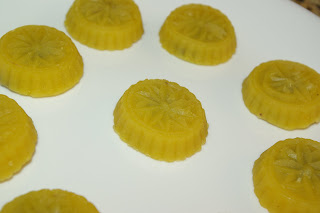
Green bean cake 綠豆糕


This popular Chinese dessert is a real treat. I love it so much that everytime I visit my parents in Taiwan, I have to pack up my suitcase with it and bring it back to the States. They were so precious that I felt I was eating gold.


It is mashed green bean (or mung bean) filled with mashed red bean (asuki bean). Sounds simple but tastes delicious. Dear Carol shared this recipe on her blog, and I couldn't wait to try it out. It tastes just like the ones I bought from the store! I was so happy. I no longer need to buy them from Taiwan. I can just make them in my own kitchen! I made about 45 of them, put them in a container, and headed to my in-laws'. The weather was in the low 60s and it's raining. Everybody was home doing nothing. We sat around the table, chatting, brewing tea and enjoying this delicious treat. It was such a wonderful afternoon filled with sweet memories.


Red Bean Filling:
12 oz. red beans
cooking oil
sugar
1 Tbsp maltose (optional)


Soak 12 oz. red beans (asuki beans) overnight. The next day, remove excess water, leave just enough to cover the beans. Cook or steam them until soft and easy to mash. Put them in the blender to finely mash them. Add a little water if too dry to operate, one Tbsp at a time. After they are mashed, weight it to get an idea of how much mashed red bean there is. Pour it in a pan, add cooking oil (8% weight of the bean), sugar (20% weight of the bean) and roughly 1 Tbsp of maltose to the mashed beans. Add more sugar if prefer sweeter taste. Stir constantly. Cook until excess water evaporates, and the mashed beans come to form a dough. Be careful not to cook it too dry. Let cool on a plate, the dough will be a little harder when cooled. Divided into 5 grams each.

This is a common filling of Chinese desserts. The leftover mashed red bean can be frozen. Just defrost it in the refrigerator the night before before the next use.


Green Bean Paste:


Peeled split mung bean


Peeled split mung beans

Soak 200 grams of peeled split mung beans in 400 grams water for two hours. Cook or steam until easy to mash. Use a silicon spatula or a fork to mash the beans, and mix in 5 Tbsp powder coffee creamer. Cook in a pan with 40 grams sesame oil, 20 grams of olive oil, 40 grams sugar and about 1 Tbsp maltose on low to medium heat. Cook until excess water evaporates, and the mashed beans come to form a dough. Let cool on a plate.


The mold is available on Amazon.com. Do not need to butter, spray or flour the mold. Put a small amount of the green bean paste in, make an indent with your thumb, put the red bean paste (5 grams) in it. Flatten it a little, and top with a small amount of the green bean paste. Flatten with your palm or a rolling pin; Remove excess green bean paste if necessary. Knock on one side of the mold first, then the opposite side. The cake should come out easily.

You can also use the madeleine pan or petit fours pan or other silicon cake mold to make it.


Homemade green bean cakes


Homemade green bean cakes


Store-bought green bean cakes

Mung Bean Benefits and Recipe

In China, mung beans are a very popular food, especially in the hot summer months. They are grown in almost all the provinces of China.
Most families in China eat mung beans and use them widely in different recipes, such as mung bean noodles, mung bean cake, mung bean rice, mung bean soup, mung bean desserts and even mung bean wine.
They are also commonly sprouted to make bean sprouts. Mung bean soup is an extremely popular family dish in China during summer.

1. The health benefits of mung beans

A very famous ancient Chinese doctor and pharmacologist, Li Shi Zhen (1518-1593), stated in his book Ben Cao Gang Mu that “mung beans are highly recommended not only as a rich source of nutrients but also as a medicine”.
He described that mung beans can help to clear heat and toxins from the body, balance the organs and skin, and tonify Qi. Mung beans can also improve circulation throughout the twelve channels of the body.
Today, we know that mung beans are low in calories and rich in fibre. They also contain vitamins A, Bs, C, D, E, K, folic acid, potassium, magnesium and zinc.
i) Clear heat and prevent summer heat-stroke
Chinese Medicine understands that the external environment has a strong influence on the body.
For example, in a hot climate, the body will absorb more heat from its external environment. If the body cannot release this heat by itself, physical symptoms may occur including: feeling hot and sweaty, red face, thirst, dry skin, constipation, lack of energy, headache and/or dizziness.
Mung beans have been shown to regulate body temperature and prevent heat stroke. Cooked mung bean soup is best kept refrigerated which helps to preserve and increase its health effects.
Drinking two or three cups a day of this soup will help to release the summer heat and rebalance the body’s yin and yang.
During the hot seasons, traditional Chinese medicine recommends foods that are cooling in nature which can assist the body to release excess heat and cool down. Ideally, these types of foods should be part of the daily diet during summer.
ii) Clear the skin and reduce acne
Traditional Chinese medicine texts categorise mung beans as sweet in taste and cooling in nature. Mung beans affect the Heart channel and clear heat and toxins from the skin, and cool heat in the blood.
Therefore, mung beans can help acne and other skin symptoms, such as the common skin rash, cold sores, mouth ulcers, pimples and boils.
The phytoestrogens in mung beans contain anti-ageing properties that stimulate the production of collagen and elastin which benefit healthier skin.
Furthermore, scientific studies have shown that mung beans provide anti- inflammatory benefits by inhibiting the release of the protein HMGB1, which regulates the inflammatory response.
To benefit skin conditions, mung bean soup should be thick in consistency and consumed at room temperature (see the recipe below).
iii) Clear toxins from the body
The proteins, tannins and flavonoids in mung beans are also considered effective for binding to and clearing pesticides and heavy metals like mercury and lead from the body.

2. Mung bean soup recipes

i) Mung bean soup recipe for summer heat and hot weather
This recipe is suitable to clear body heat and prevent heat stroke during a hot summer.
2 handfuls of mung beans 7 cups of water
Bring to the boil and simmer for 15 minutes on low heat. Set the soup aside to cool (once cooled it can also be refrigerated).
Drink this thin soup as required. The beans can also be eaten if soft enough.
ii) Mung bean soup recipe for skin conditions
This recipe can help to clear skin heat and reduce acne and other skin complaints as mentioned above.
2 handfuls of mung beans 4 cups of water
Bring to the boil for 3 minutes in a saucepan, then remove from heat and cover with a lid. Allow the beans to soak in the boiled water for 30 minutes then strain and drink the thick liquid soup.
This process can be repeated once more using the same batch of mung beans.
It is recommended to drink one cup of this soup twice a day in conjunction with regular treatment. Give yourself two days break from the soup after every five days.

3. Precautions and diet advice

Mung beans are generally not suitable for people who have a cold body constitution. Avoid eating mung beans if you have diarrhoea or often experience cold symptoms such as cold hands and feet.
If you are unsure of whether or not mung beans are suitable for you, or if your symptoms persist, please consult with your experienced traditional Chinese medicine practitioner.

Tuesday, March 22, 2016

一目了然:目诊 | Eyes: window to (much) more than the soul

“名门者,目也。” 与耳诊、手诊等一样,眼睛里可看出的等学问可大了... 从瑶医目诊到老中医的望诊辩证,巨人的肩膀上加以积累,了解更多都受益。


20150331 《养生堂》:名老中医的望诊秘诀(1)
http://youtu.be/VW-2UpvUtCY
快进37分钟左右有图,以下系列中反复出现。

20150401 《养生堂》:名老中医的望诊秘诀(2)
https://youtu.be/zPRFNFDQCmE

20150402 《养生堂》:名老中医的望诊秘诀(3)
http://youtu.be/5uXVJ0AbadY

20150403 《养生堂》:名老中医的望诊秘诀(4)
http://youtu.be/gKxWE68TSAs

瑶医目诊(上): 北京瑶医医院覃迅云教授讲解神奇目诊
http://youtu.be/ShvXnx3R2U0

---
养生堂 20130422 四代中医名家的护目绝学(1)
http://youtu.be/9-OgC_VRZJ0


Tuesday, August 18, 2015

General Deficiency and Excess of Yin and Yang


General Deficiency and Excess of Yin and Yang

Quality of:Excess Yang - Acute
(Excess Heat Condition)
Yin Xu - Chronic
(Deficient Heat Condition)
Excess Yin - Acute
(Excess Cold/Dampness Condition)
Yang Xu - Chronic
(Deficient Cold Condition)
Pulse
Normal: Moderate
Rapid, Strong.
Rapid, Weak.

- Could Be Thinner
Slow.
Slow, Weak.
Tongue
Normal: Pink/Light Red
Red Body, Yellow Coat
Notes:
Yellow Due To Heat Burning Body Fluids.
Red Body, Thin/No Coat

Notes:
Light Mild Heat/Slow Boiling Heat.
Map Coating (Partial Peel: Only Part Of Tongue Has Coat).
Pale/Pink Or Purplish/Bluish Body.

- Poss. Thick Coat

- Poss. Swollen

Notes:
Thickness Due To Excess Body Fluids.
Pale Body, Thin/White Coat (Normal), Flaccid.
- Poss. Teeth Marks Over Months Or Years

Notes:
Not Excess Or Additive Cold, More Of A Xu Cold.
Has Nothing To Do W/Yin Fluids.
Water Metabolism Slows, Causing Chronic Water Retention Problem.
Face
Red.
- Poss. Dryness
Only Cheeks Red.
- Poss. Dryness
Pale.
- Poss. Swollen
Pale.

Eyes
Red.
Notes:
If Inflammation Is Involved There Will Be Burning Sensation.
Any Burning Sensation Is Usually Associated W/Heat.
Red, Dry.
Notes:
Dryness Due To Fluid Xu, And Heat Excess.
Edema Around Eyes.
Dark Circles.

Notes:
Dark Circles Due To Slow/Poor Circulation. Kidney Involved: Kidney Qi Xu, Or Kidney Yang Xu.
Skin
Red, Inflamed.
- Poss. Skin Rashes
Notes:
If Patient Sweats, It Will Be A Profuse Sweat.
Dry Skin.
- Poss. Rash, But No Puss Or Wounds

- Poss. Sweat, But Only In Late Afternoon, Or At Night

- Poss. Five Palm Heat
Oily Skin, Body Odor, Pale.
- Poss. Rashes W/Puss If There Is Dampness

- Poss. Cysts, Masts, Edema Due To Fatty Tissue Stagnation
Notes:
If There Is Sweat, It Will Be Greasy And Oily.
Dampness Tries To Protect The Evil By Pulling It Down, Inhibiting Sweat From Benefiting Fever Condition.
Spontaneous Sweat W/Wo Exertion.
Notes: Door Is Open, Functional Yang Energy Xu, So Sweat Leaks Out.
Lungs
Strong/Loud Cough W/Phlegm.
- Poss. Yellow, Green, Or Brown Phlegm. Indicates Infectious Disease

- Poss. Blood
Weak/Dry Cough.
- Poss. Aftermath Of Illness
Notes:
Smokers Cough.
Profuse Thick White/Clear Phlegm.
Shortness Of Breath, Difficulty Breathing, Or Weak Shallow Breathing.
Notes:
Asthma Has Both Lung And Kidney Xu.
Heart
Very Rapid/Strong Beat.
Notes:
Stimulants Such As Coffee & Cigarettes Are Excess Yang Additives Into The System.
Rapid/Weak Beat.
- Poss. Discomfort/Pain Around The Heart
Very Poor Blood Circulation.
- Poss. Heart Pain

- Congestion: Blood Clots Due To Blood Stagnation
Notes:
Heart Failure Prevalent.
When There Is Stagnation There Is Pain, No Stagnation, No Pain.
Angina.
Weak Heart And Low Functional Energy, Lots Of Heart Problems.
- Poss. Skipping Heart Rates
- Poss. Cardiac Pain, And Cardiac Failure
Appetite
High.
Notes:
Patient May Eat A Lot, But Do Not Gain Weight
Hungry, But Can Not Eat.

- Poss. Gas, Bloating, Abdominal Pain, Nausea, Vomiting, Diarrhea
Notes:
Deficient Fluids (Insufficient To Digest Food).
Very Low Appetite.
Notes:
Crave Foods That Create Dampness, Such As Raw Or Greasy Foods, Makes Patient Feel Comfortable. Could Be Cause Of Illness.
Very Low Appetite, No Energy To Eat/Digest.
- Poss. Undigested Food In Stool
Thirst
High Thirst, Likes High Quantity Of Cold Drinks.
Thirsty, Sips Cool Drinks, But Can Not Drink Very Much.
Might/Might Not Have Low Thirst.
Low Thirst, Likes Warm Water.
Digestion
Bloating, Stool Will Be Dry, W/Difficult Bowel Movement, Extending Pain, Sharp Pain, Does Not Like Pressure, Does Not Like Heat.

- Poss. Burning Diarrhea Associated W/Damp Heat Or From Extreme Heat Stagnation. Truly A Constipation Condition Where Only Fluids Can Be Passed (Appears To Be Diarrhea), But Solids Are Not Passed
Notes:
Do Not Give Patients Warm Water Or Spicy Foods.
Dry Hard Stool (Chronic). Dull, Achy Abdominal Pain, W/A Little Burning Sensation. Likes Pressure, Does Not Like Heat.
Sticky Stool W/Mucus, Poorly Formed. Abdominal Pain. Does Not Like Pressure. Likes Heat.
- Poss. Diarrhea
Weak/Slow Digestion. Mild, Dull, Achy Abdominal Pain. Likes Heat, Likes Pressure.
- Poss. Early Morning Diarrhea. Lowest Environmental Yang.
Kidney / Bladder
(Water Metabolism)
Dark, Scant, Yellow Urine, Strong Urinary Track Inflammation (UTI).
- Poss. Extending/Sharp Pain
Notes:
UTI Symptoms: Urgency, Frequency, And Burning Sensation.
Scant, Light Yellow Urine, Low Grade UTI.
- Poss. Chronic
Copious Urination, Light/Whitish Colored.
- Poss. Cloudy Or W/Puss Due To Dampness
Copious, Clear, Frequent, Usually Night Urination.
- Poss. Feeling Of Not Being Finished, Due To Lack Of Functional Energy
Notes:
Kidney Yang Deficiency Problem.
Reproduction
Strong/Excess Sex Drive
- Poss. High Chance Of Contracting Illness (Fatigue, PID's, STD's, Prostatitis)
- Poss. Hormone Imbalance
Slightly Higher Sex Drive, But Tires Easily (Hard Time Performing).
- Poss. Vaginal Dryness
Prone To STD's, Yeast, Infections, Warts, Cysts.
Low Sex Drive, Can't Perform.
- Poss. Infertility, Premature Ejaculation, Nocturnal Emissions, Low Sperm Count
Menses
Normal: Regular, No PMS, No Cramps, No Clots, No Spotting
Very Red Color, Short Cycle.
- Poss. Early Menstruation (5 To 7 Days)
Notes:
Blood Is Either Dried Up In A Short Cycle, Or Heavy Due To Pushing Force Of Heat.
Brown Or Dark Red, Scanty.
Dark Purplish, Long Period Or No Period Due To Excess Fluids Or Cold Respectively
- Poss. Blood Clots
Long Cycle, Thin, Or Light Colored, Delayed Menstruation.
- Poss. Skipping Cycle (No Cycle)
Sleep
Does Not Like To Sleep, Toss And Turn, Restless.
Notes:
Coffee Is A Good Example Of Excess Functional Energy Added To The System.
Trouble Falling Asleep, Symptoms Worse At Night.
- Poss. Day Time Naps, Easier To Fall Asleep
Notes:
Blood Deficiency.
Wants To Sleep, Groggy After Sleep.
Notes:
Clear Yang Gets Pulled Down By Dampness.
Wants To Sleep A Lot, Likes To Take Naps, And Always Feels Better After Sleep.
Energy
High Level Of Energy, Restless.
Restless, But Exhausted. Tired, But Cannot Sleep.
Often Feel Tired, Lethargic w/no Motivation.
Weak, Due To No Functional Energy, True Weakness.
Emotions
Angry, Anxious, Agitated, Restless All The Time.
Angry And Anxious, But Less Energy Behind The Emotion.
Clinical, Mental, Or Neurological Disorders.

Notes:

Two Types Of Mental Illness. Phlegm Misting The Heart: Not Social, Hide In A Corner. Phlegm Heat Attacks/Invades The Heart.
Sad, Depressed, No Motivation, Cannot Interact, Afraid, Low Self Esteem.
Speech
Loud, Rapid, Talks A Lot.
Speaks Quickly, But Not Loud Or Strong.
Slow Speech, Heavy Or Phlegmy Voice, Speech Disorders, Esp. W/Tongue Swelling.
Slow And Weak. Mainly Yes Or No Answers.
Body Temperature
Hot, High Fever, Sensitive To Heat.
Low Grade Fever, 5 Palm Heat (Also called 5 Center Heat).
Cold, Sensitive To Cold.
Very Cold, Sensitive To Cold.
SHARE